Wood vs Plastic vs Titanium Cutting Boards: Which One Belongs in a Beautiful Kitchen?


This article contains affiliate links. As an Amazon Associate, Essenzy Place earns from qualifying purchases.
A cutting board is one of the most used tools in the kitchen, but it is also one of the most misunderstood.
Some people choose wood because it looks beautiful. Others prefer plastic because it feels easier to clean. And now, titanium cutting boards are becoming popular because they look modern, feel durable, and promise a cleaner alternative to traditional materials.
But which one is actually better?
At Essenzy Place, we look at kitchen essentials from both sides: how they perform and how they look inside a beautiful home. A good cutting board should help with food prep, protect your knives, stay clean with proper care, and still look good on the counter.
Let’s compare wood, plastic, and titanium cutting boards by cleaning, bacteria, knife preservation, durability, and design.
1. Wood Cutting Boards
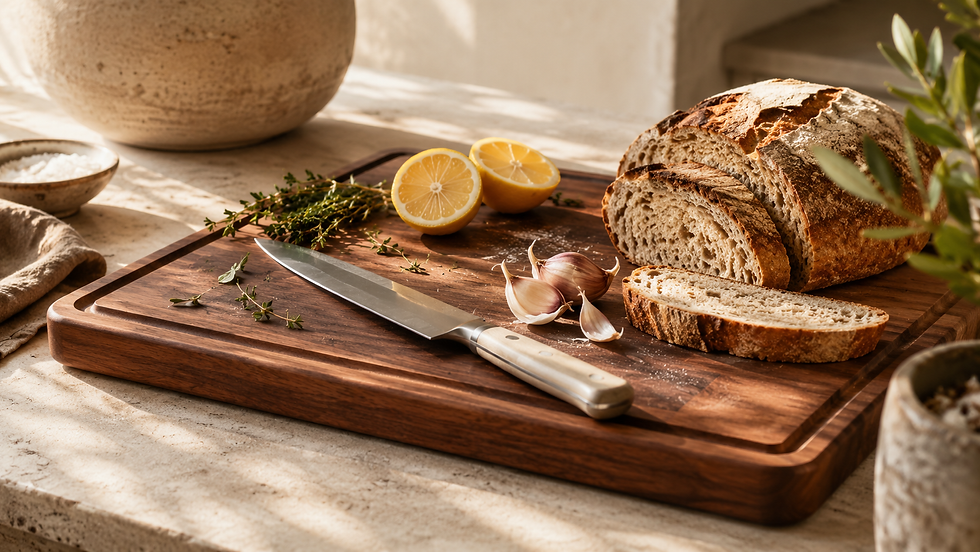
Wood Cutting Boards: The Beautiful Kitchen Classic
Wood cutting boards are the most timeless option. They bring warmth, texture, and a more elevated look to the kitchen. A beautiful wood cutting board can also double as a serving board for bread, cheese, fruit, or small gatherings.
For the best kitchen aesthetic, wood is usually the winner.
A quality wood cutting board works beautifully for vegetables, bread, fruit, herbs, and everyday prep. It feels natural, looks premium, and fits especially well in kitchens with warm wood, stone, beige, taupe, or modern organic design.
The downside is maintenance. Wood should usually be hand washed, dried well, and oiled regularly to help prevent cracking, warping, or deep dryness. It should not be left soaking in water.
Is wood good for bacteria?
Wood can be safe when cleaned and dried properly, but it requires better habits. Because wood is porous, you should avoid letting it stay wet for long periods. Deep cracks, old grooves, or damaged areas can make any cutting board harder to clean.
For best results, use wood mostly for produce, bread, cheese, herbs, and presentation.
Is wood good for knives?
Yes. Wood is usually the best material for preserving knives, especially quality hardwood boards. It feels softer under the blade compared to harder surfaces, which helps reduce unnecessary dulling.
Best for:
Beautiful kitchens
Knife preservation
Bread, vegetables, herbs, and cheese
Serving and presentation
Premium home styling
Not ideal for:
Dishwasher use
Low-maintenance households
Leaving wet in the sink
Very heavy raw meat use without careful cleaning
2. Plastic Cutting Boards

Plastic cutting boards are popular because they are lightweight, affordable, easy to replace, and often dishwasher-safe. This makes them very practical for everyday cooking.
A good plastic cutting board is useful for raw meat, poultry, fish, and quick meal prep because it can be cleaned easily and replaced when it becomes too worn.
Plastic is not the most beautiful option for a luxury kitchen, but it is one of the most practical.
Is plastic good for bacteria?
Plastic can be easy to clean, especially if the board is dishwasher-safe. The issue is that plastic boards develop knife grooves over time. When those grooves become deep, they can trap food residue and become harder to clean properly.
That is why plastic cutting boards should be replaced once they become deeply scratched, stained, warped, or difficult to clean.
Is plastic good for knives?
Plastic is usually acceptable for knives, but it may dull knives faster than a high-quality wood board, especially with heavy use. Still, for most home kitchens, plastic is convenient and practical.
Best for:
Raw meat and poultry
Dishwasher cleaning
Quick everyday prep
Budget-friendly kitchens
Easy replacement
Not ideal for:
Premium kitchen styling
Long-term beauty
Deep knife grooves
People trying to avoid plastic contact with food
3. Titanium Cutting Boards
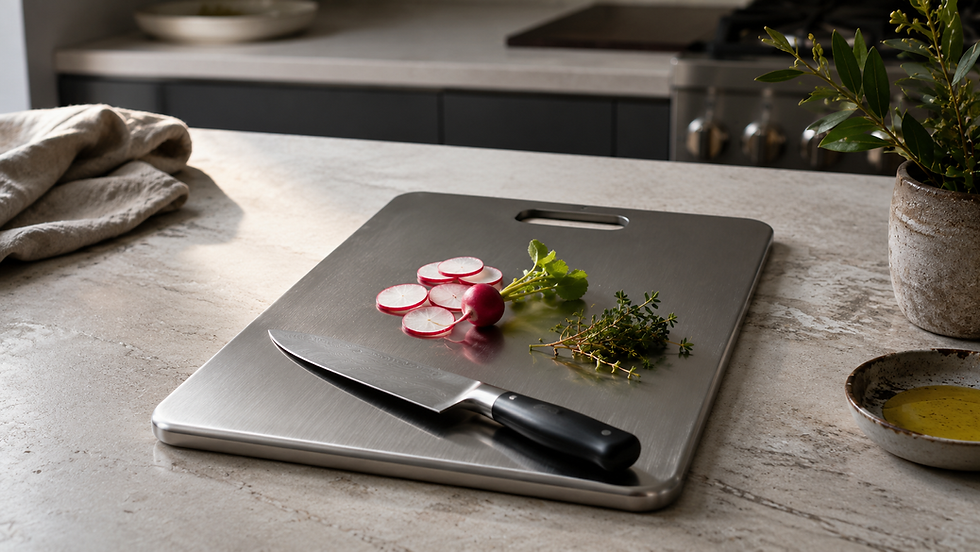
Titanium cutting boards are becoming popular because they look sleek, modern, and highly durable. They appeal to people who want a non-plastic option that is easy to clean and resistant to moisture.
A titanium cutting board can look very clean and futuristic, especially in a modern kitchen. It can also be appealing if you want something that does not absorb moisture the way wood can.
Is titanium good for bacteria?
Titanium is nonporous, which means it does not absorb moisture like wood. That makes it easy to wipe and clean. However, you still need to wash it properly after use, especially after raw meat or fish.
No cutting board is “maintenance-free” when food safety is involved.
Is titanium good for knives?
This is where titanium needs caution. Titanium is harder than wood and plastic, so it may not be as gentle on knife edges. If you use expensive knives, wood is still the better choice for preserving sharpness.
Titanium may work better for people who value easy cleaning, durability, and a modern look over maximum knife protection.
Best for:
Modern kitchen design
Easy wiping and cleaning
Moisture resistance
People avoiding plastic boards
Sleek, minimal aesthetics
Not ideal for:
Preserving premium knives
Traditional kitchen styling
People who prefer a softer cutting feel
Heavy chopping with delicate blades
Wood vs Plastic vs Titanium: Quick Comparison
Wood is best for beauty and knives.
Plastic is best for practical cleaning and raw meat prep.
Titanium is best for a modern, nonporous, easy-clean surface.
If you care most about how your kitchen looks, choose wood.
If you care most about convenience, choose plastic.
If you want something modern, durable, and different, choose titanium.
Which Cutting Board Is Best for Cleaning?
Plastic and titanium are the easiest to clean day to day.
Plastic often wins for convenience because many plastic boards can go in the dishwasher. Titanium is also easy to wipe and rinse because it is nonporous.
Wood can be cleaned safely, but it needs more care. You should wash it by hand, dry it quickly, and avoid soaking it.
Best for cleaning: plastic or titanium
Best for careful long-term care: wood
Which Cutting Board Is Best for Bacteria?
The safest cutting board is the one you clean correctly and replace when damaged.
Plastic is convenient, but deep grooves can hold residue. Wood looks beautiful, but it needs proper drying. Titanium is nonporous, but it still needs proper washing after use.
The best kitchen habit is to use separate boards:
One board for raw meat, poultry, and fishOne board for vegetables, bread, fruit, and ready-to-eat foods
This simple habit helps reduce cross-contamination and keeps the kitchen more organized.
Which Cutting Board Is Best for Knives?
Wood is the best choice for knife preservation.
A good wood cutting board feels softer under the blade and is more forgiving than harder surfaces. Plastic is practical but may dull knives faster over time. Titanium looks modern, but because it is harder, it may not be the best option for expensive knives.
Best for knives: wood
Good everyday option: plastic
Most caution for knives: titanium
Which Cutting Board Looks Best?
Wood is the clear winner for looks.
A wood cutting board can stay on the counter and look intentional. It adds warmth, texture, and visual depth to the kitchen. It also works beautifully in lifestyle photography, open shelving, kitchen islands, and serving moments.
Plastic is more functional than beautiful.
Titanium looks clean and modern, but it has a colder, more utilitarian feel. It can work in a minimalist kitchen, but it does not bring the same warmth as wood.
Best looking: wood
Most practical: plastic
Most modern: titanium
The Essenzy Place Recommendation
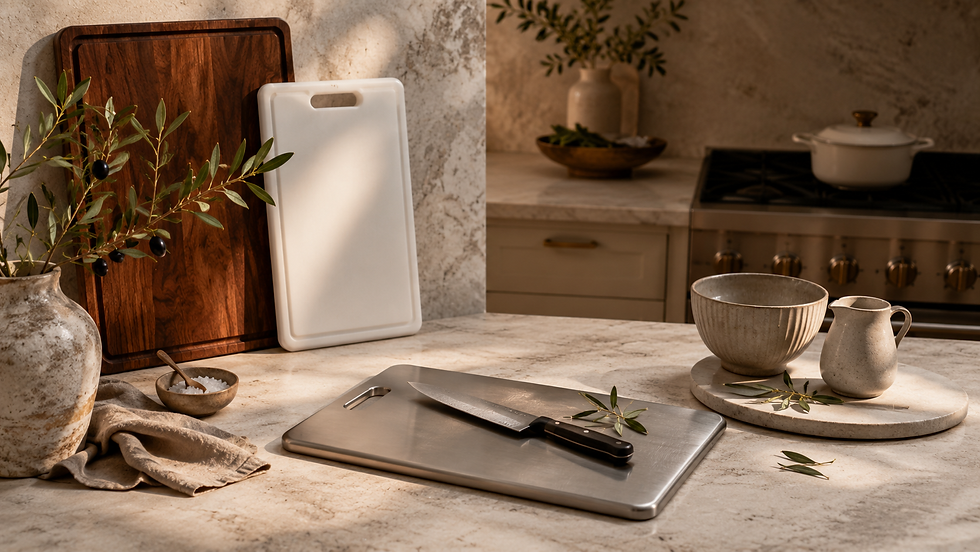
For the best kitchen setup, we recommend using more than one cutting board.
Use a wood cutting board for vegetables, bread, herbs, cheese, serving, and beautiful everyday prep.
Use a plastic cutting board for raw meat, poultry, fish, and quick dishwasher-friendly cleaning.
Use a titanium cutting board if you want a modern, easy-clean alternative that avoids plastic and resists moisture.
This gives you the best of all three worlds: beauty, practicality, and modern function.
Related Home Essential: Better Air in the Kitchen
A cleaner-feeling kitchen is not only about surfaces. Air matters too.
If your kitchen often feels heavy after cooking, or if smells travel into your living room, you may also like our guide on air purifiers, humidifiers, and dehumidifiers for a more comfortable home.
Together, better surfaces and better air can make your kitchen feel fresher, cleaner, and more intentional.
Final Verdict: Which One Is Better?
If you want the best overall cutting board for a beautiful kitchen, choose wood.
If you want the easiest everyday cutting board for cleaning and raw meat, choose plastic.
If you want the most modern and nonporous option, choose titanium.
But the smartest choice is not choosing only one. The smartest kitchen has a system:
Wood for beauty and knives.
Plastic for raw meat and easy cleaning.
Titanium for modern, low-absorption prep.
A cutting board is more than a surface. It is part of the rhythm, look, and cleanliness of the kitchen you use every day.
Choose the one that fits your habits — and the one that makes your kitchen feel better.
Comments